

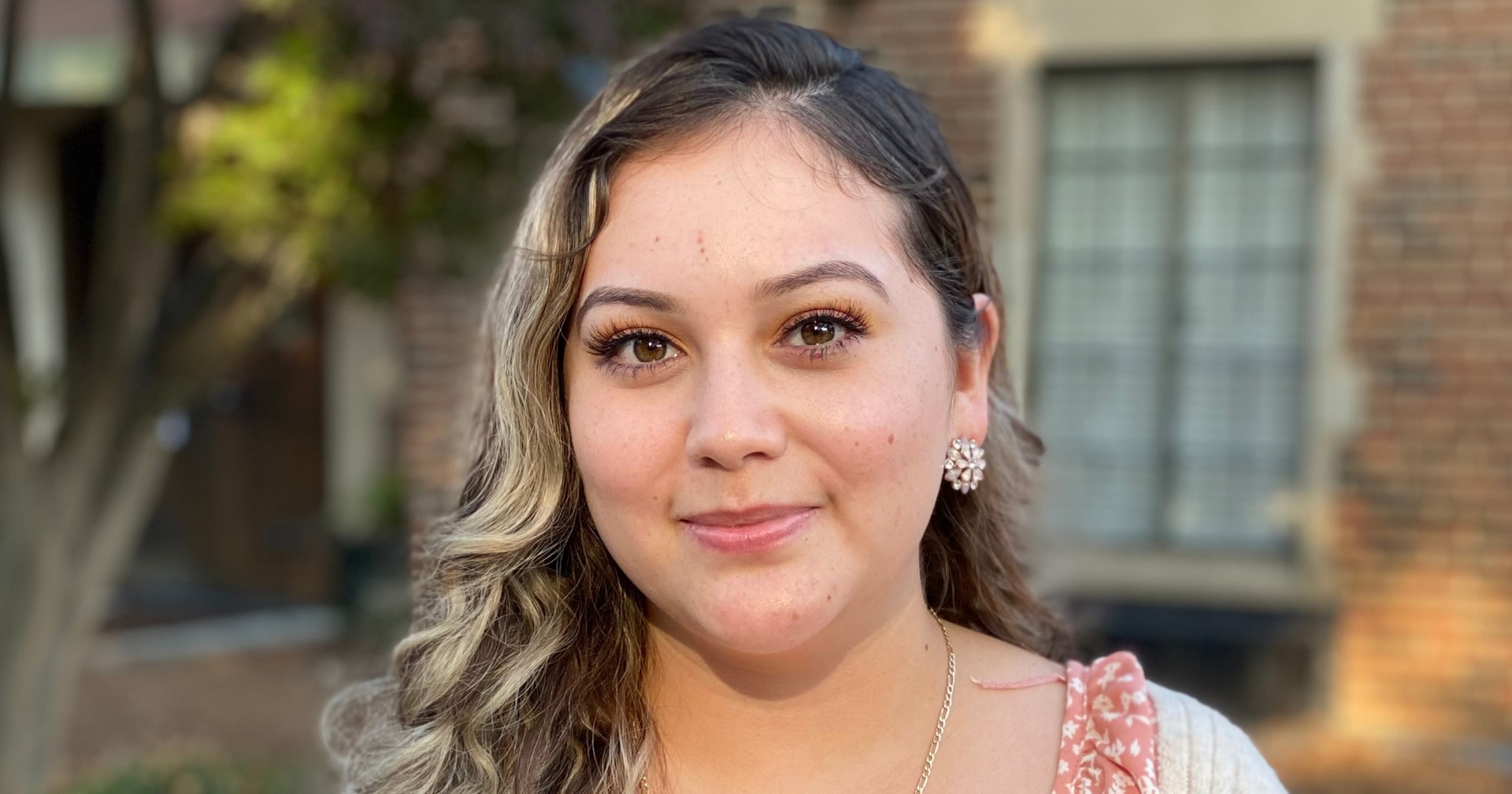
Daisy Arguello is a case worker with the U.S. Committee for Refugees and Immigrants.
Drawing on lessons from Guilford's Peace and Conflict Studies, Daisy Arguello '20 helps migrant, immigrant and refugee families find safety, services and a sense of home.
“The mediation part of peace and conflict — how to help communities and how to help with peace — that interested me."
Today is International Migrants Day, though for Daisy Arguello ’20, it is a designation that barely scratches the surface. In Daisy’s world, every day is International Migrants Day.
Daisy is a case worker with the U.S. Committee for Refugees and Immigrants. The work she does is quiet and exacting, the kind that rarely announces itself. It happens in living rooms and kitchens, in careful home visits where she checks for hot water and electricity, beds and doors that lock. It happens in conversations with children who crossed borders alone and families trying, in uneven English, to stitch a life together again. Migrants. Immigrants. Refugees. The labels shift. The needs do not.
She provides support to unaccompanied refugee and immigrant children – many of them survivors of trafficking, persecution, or violence. She conducts safety assessments, visits homes, connects families to medical and mental health care, advocates for education, and helps document cases that allow trafficked children to obtain work permits and stability.
That work, Daisy says, is rooted in habits she began developing at Guilford College: listening carefully, asking the right questions, and acting with intention once the answers are clear.
Those instincts formed long before college. Daisy grew up in an immigrant family. Her parents came to the United States from Mexico nearly three decades ago. When she was 8, she became the family interpreter — in doctor’s offices, grocery stores, fast-food counters. “You’re really doing grown-up work,” she says. “It gave me a lot of anxiety when I was a kid.”
Much of Daisy’s work today unfolds far from public view. She meets families where they are – literally – stepping into apartments and borrowed rooms to assess safety and stability. She asks careful questions about heat and water, school enrollment and medical care. She listens for what isn’t said as much as what is. With children, especially those who arrived alone, she moves slowly, building trust one conversation at a time. With parents and sponsors, she explains complex systems in plain language, translating fear into steps, uncertainty into plans. It is work measured less by outcomes than by steadiness: showing up, documenting, advocating, making sure no one slips quietly through the cracks.
Daisy arrived at Guilford in 2016 intending to major in Criminal Justice. A required course introduced her to Peace and Conflict Studies — and to professors who emphasized mediation, community-based problem-solving, and the discipline of listening. She added PCS as a second major.
“The mediation part of peace and conflict — how to help communities and how to help with peace — that interested me,” she says.
Her learning extended beyond the classroom. Through community work in Greensboro’s Oakwood neighborhood, Daisy helped children learn English and complete homework after school. The work felt familiar. It also clarified her path.
“That’s where it started to click,” she says. “I realized I needed to stick with helping immigrant and refugee communities.”
After graduating, Daisy moved directly into that work, beginning at FaithAction International House in Greensboro — first as an intern, then as a case manager helping families navigate emergency financial assistance, hospital bills, school enrollment, and basic services. “I was doing what I did as a kid,” she says, “but doing it as an adult.”
The work remains demanding, emotionally and mentally, especially now, when uncertainty shadows the systems meant to protect vulnerable children. “It can be stressful mentally, but even more stressful for the kids coming through,” she says. “They’re the ones who keep me going.”
Guilford, Daisy believes, prepared her not by offering easy answers, but by teaching habits of attention. Criminal Justice helped her understand systems. Peace and Conflict Studies helped her understand people.
“The peace part and the justice part just went together,” she says. “I learned how to advocate. I learned how to help families find peace — and a little bit of justice.”