

At the Guilford College Farm, vegetables flourish alongside a lesson the rest of the world often forgets: the best things — food, learning and people — cannot be rushed.
Authenticity is easy to advertise and difficult to practice. Lots of colleges talk about being different. Guilford is one of the few who walk the walk.
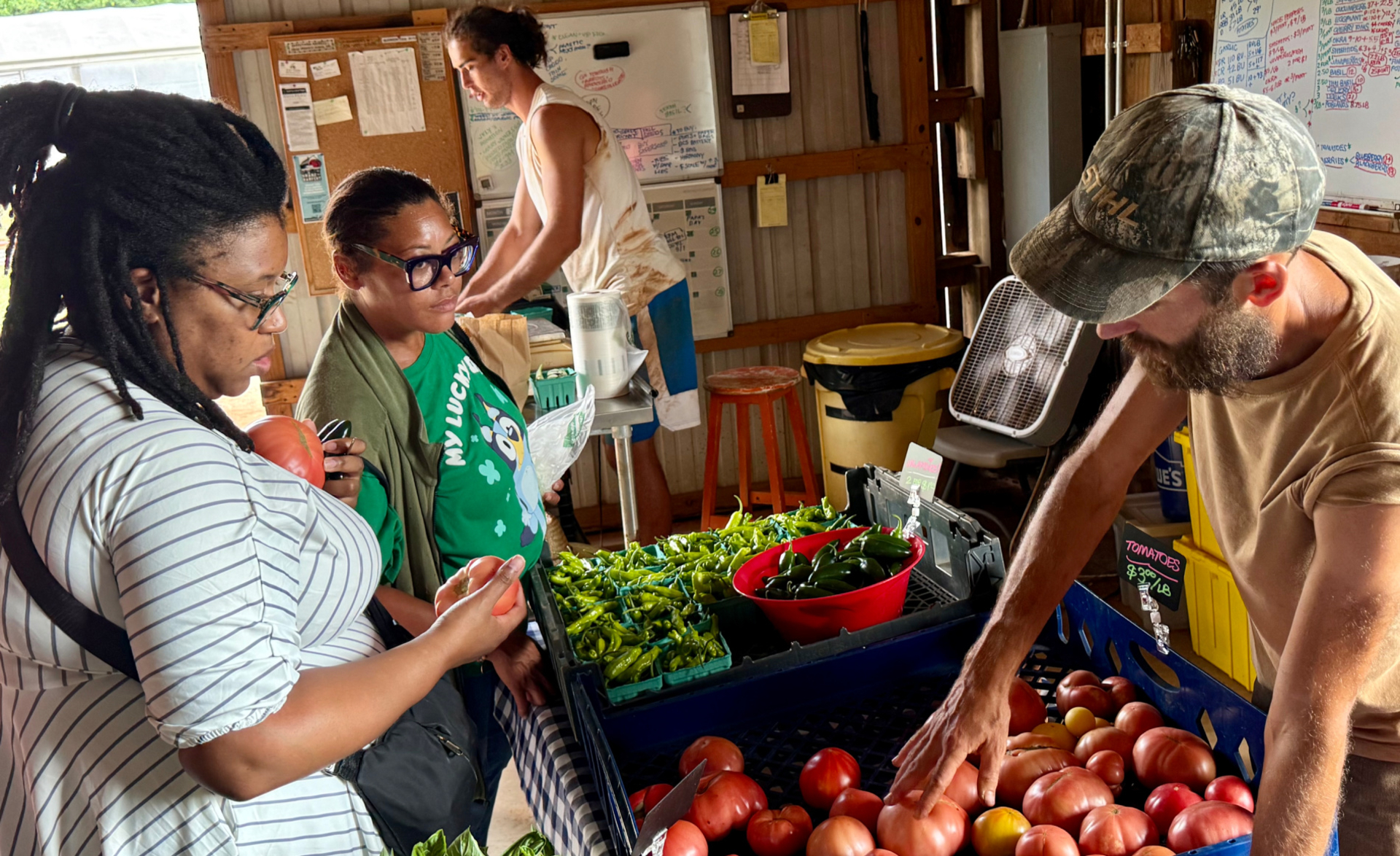
On a Wednesday afternoon this month at the Guilford College Farm, a woman with a plastic shopping bag picked up a slicer tomato and did something almost radical in this impatient age.
She studied it.
She didn’t just grab it, scan it, toss it into a cart and hurry toward the next thing. She turned the tomato slowly in her hand, flecking off some of the evidence of the soil that raised it. She felt its weight, spellbound by its ruby skin. She admired the quiet miracle of something that started as almost nothing before placing it in her bag next to the potatoes, summer squash and cucumbers already there for the ride home.
This is how food is supposed to work. This is how learning is supposed to work, too.
Tomatoes grow and ripen. So do ideas. People, too.
That sounds obvious until you remember how much of the modern world is designed around avoiding the wait. We want everything faster. Faster answers. Faster results. Faster success. Even our food has been shaped by the demands of speed. Tomatoes bred to survive shipping rather than delight anyone eating them, vegetables designed to look perfect under a grocery store’s soul-sucking fluorescent lights.
Find your way to the Guilford College Farm off New Garden Road beside New Garden Friends School, on Wednesdays from 4 to 6 p.m. this summer, and the world feels a little different.
Here, garlic hangs from the barn’s rafters, freshly pulled from the earth and left to dry the old-fashioned way. Nobody is rushing it. Nobody is asking garlic to become something other than garlic on its own time.
There are purple eggplants with a shine so deep they look like they belong in a painting. There are jalapenos and Shishito peppers waiting for someone who understands that food should have a little personality. Over there, next to the basil – mmm, basil – is the Swiss chard. There are pinkish slicer tomatoes that will soon turn ruby red. In a day or two they will remind you what a tomato actually tastes like – sweet, bright and alive – not the plastic imitation we’ve accepted for too long.
And then there are the potatoes.
Even their names tell a story.
German Butterball.
Rose Finn Apple.
Désirée.
They sound less like items on a grocery list and more like characters from an old novel. Each variety unique. Each with its own purpose. Each grown because differences matter.
That may be the best explanation of why Guilford’s farm feels so much like the College itself.
Authenticity is easy to advertise and difficult to practice. Lots of colleges talk about being different. Fewer show up every day to do the walk.
Our Quaker roots have always carried a belief that every person has value, that every voice matters, that growth cannot be forced. You create the conditions. You provide the nourishment. You give people space. And then you trust the process.
Farmers know this.
You cannot lecture a seed into becoming a plant.
You cannot demand a tomato ripen before its time.
You cannot skip the seasons.
Education works the same way.
Students arrive at Guilford carrying their own stories, their own strengths, their own uncertainties. They need challenge. They need encouragement. They thirst for people who notice them.
A farm does not grow by accident, and neither does a person.
Both require patience.
Both require care.
Both require someone believing in what is possible long before everyone else can see it.
That is why there is something quietly powerful about a farm planted next to a college. It rejects the idea that bigger always means better or that faster always means progress. It asks for patience while a miracle germinates in the dark soil before pushing through and into the light.
Sometimes progress looks like a student kneeling in the dirt and learning where food comes from.
Sometimes it looks like a conversation between a professor and a student that changes the way that student sees the world.
Sometimes it looks like a woman standing in a barn on a Wednesday afternoon, rolling a red tomato in her hand because she understands something worth having is worth noticing.
The Guilford College Farm produces vegetables, yes.
But it also produces reminders.
Real things take time.
Roots matter.
That what happens beneath the surface can often prove the most important part of growth.
And that, in a world filled with artificial everything, there is still extraordinary value in something genuine.
A tomato that tastes like a tomato. A College that feels like a community.
A place where good things are allowed to grow. In their own way, in their own time.