

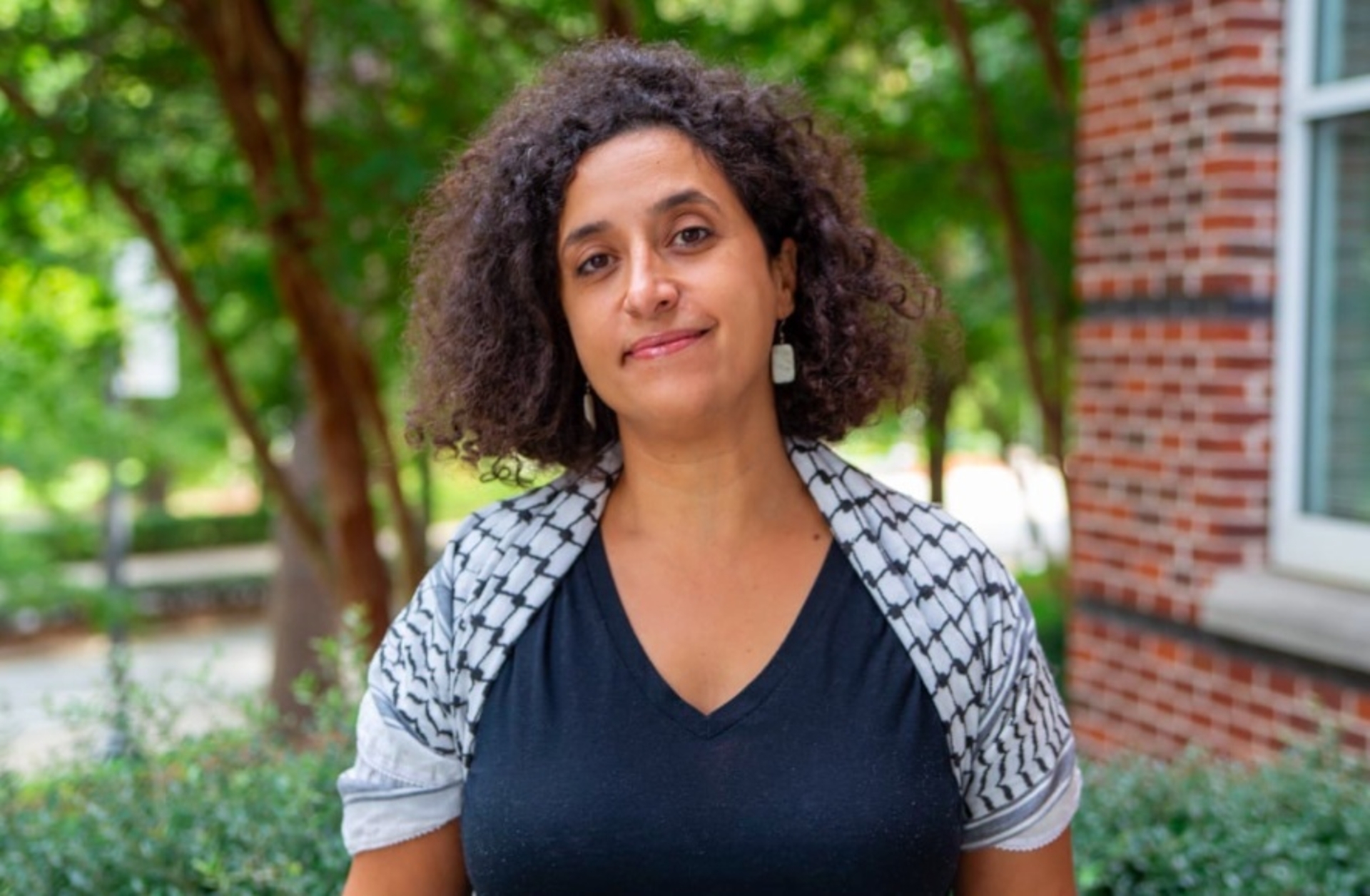
With over two dozen campuses across the U.S. participating, ECAR, an idea born at Guilford, continues to grow under the leadership of Diya Abdo.
"We're trying to get our work funded in a very challenging environment. This is another way to make the case for ECAR. It's a visible platform that gets more eyes on our work and, hopefully, more people interested in supporting it."
When a national publication as influential as Forbes tells your story, it is tempting to view it as a milestone. For Diya Abdo, the recent feature is better understood as another step in a movement that has quietly spread from Guilford College to campuses across the country.
A June 25 Q&A by Forbes highlights Diya’s groundbreaking Every Campus A Refuge (ECAR) program and the remarkable growth of an idea born at Guilford. The interview chronicles how a simple question — what if colleges welcomed refugees the same way they welcome students? — has evolved into a national model now operating on 24 campuses.
For Diya, founder of ECAR and the Lincoln Financial Professor of English in the Department of English and Creative Writing at Guilford, the recognition matters less as a personal accolade than as a way to introduce more people to ECAR's mission.
"We're trying to get our work funded in a very challenging environment," Diya says. "This is another way to make the case for ECAR. It's a visible platform that gets more eyes on our work and, hopefully, more people interested in supporting it."
Founded at Guilford in 2015, ECAR has become one of the College's most recognizable contributions to higher education and humanitarian work. The model asks colleges and universities to use existing campus housing to temporarily host refugee families while students, faculty and staff help newcomers navigate everything from transportation and employment to schools, language acquisition and community life.
More than a decade after its launch, the work continues to evolve.
At Guilford, ECAR is currently hosting a single mother from Africa and her children after the family faced housing instability following a disrupted resettlement process. Working with Church World Service, the College is providing temporary housing and community support.
The family's newest arrival has already become part of the Guilford story. Community members recently attended a baby shower for the family. "What I love about this work is that people showed up who never would have connected with a refugee in any other context,” she says. “Those relationships are what this is really about."
Similar stories are unfolding across ECAR's 24 partner campuses, where students continue assisting refugee families through housing, legal services, employment support and educational programming.
While those campus partnerships remain ECAR's foundation, the organization is also expanding its reach.
Among its newest initiatives is an effort to help refugees enter the workforce by collaborating with community colleges and refugee resettlement agencies. Diya says ECAR is also developing a certification program that will help colleges assess and strengthen their practices for welcoming newcomer populations.
"We're looking at how campuses can be trained and then evaluated on their welcoming and inclusive practices," she says. "We want institutions to think intentionally about what it means to support newcomers."
ECAR's growing national network will gather again in October in Tulsa, Okla., where members from across the country will share ideas and best practices during the organization's annual Gathering. The Gathering will feature civic leaders, including Tulsa's mayor and representatives of Tribal Nations, reflecting the community-centered approach that has become central to ECAR's work.
The timing of the Q&A with Diya in Forbes is especially significant as immigration and refugee policy remain prominent national conversations. She believes colleges have an important role to play regardless of the political climate.
"Our campuses are still doing their work," she says. "They're educating students about immigration and refugee issues. They're supporting families. They're creating communities where newcomers can belong."