

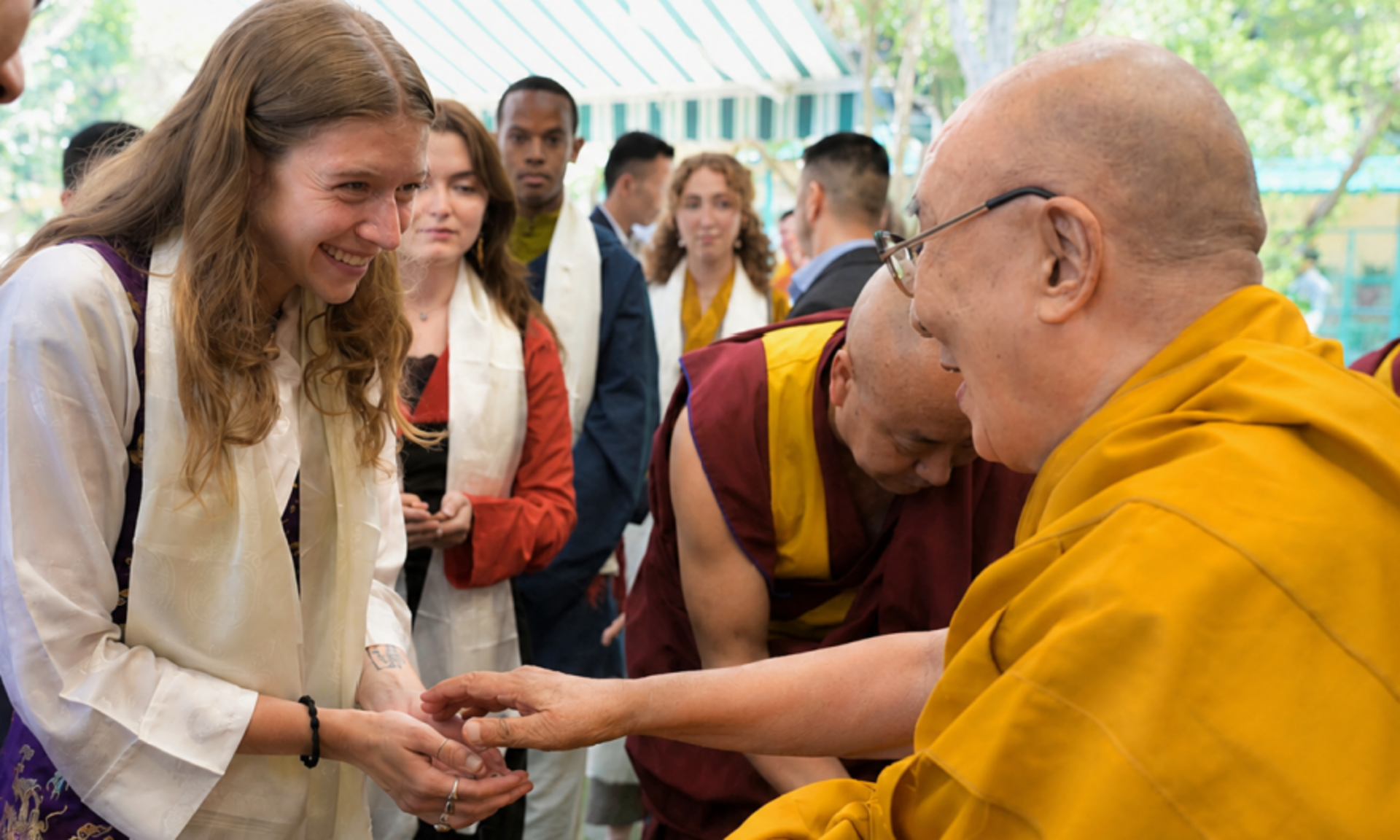
Lily Brown '26 meets with the Dalai Lama during one of Guilford College's 2026 study abroad trips this spring.
Guilford study abroad programs create life-changing experiences that endure long after students return home.
The most important thing Guilford College students often bring home from a study abroad experience isn’t a souvenir. It’s a different way of seeing.
A mountain becomes more than a mountain. A game becomes more than a game. A border is no longer just a line on a map. The world, once flattened by screens and textbooks, suddenly acquires depth.
That is what Guilford’s Global & Off-Campus Initiatives programs do so well. They do not simply take students to another country. They teach them how to see things differently.
In May, that learning unfolded across three continents and countless moments that could never fit neatly into a syllabus
In northern Italy, Honors students studied sustainable living at Brunnenburg Castle, perched high above vineyards and valleys shaped over centuries. They examined food systems, environmental stewardship and human relationships with the land while standing in the middle of those very systems. The classroom wasn’t separate from the lesson. It was the lesson.
In South Africa, students found something harder to put on a transcript. They wandered through the lingering shadows of apartheid, sat in classrooms with children whose stories complicated their assumptions, studied the uneasy parallels between South Africa and America, and discovered that the world is always larger — and more human — than the version we carry around in our heads.
Another group traveled through Europe exploring the global business of sport. They visited Olympic venues, met industry leaders and saw firsthand how athletics can shape economies, cities and national identity. The trip wasn’t really about sports. It was about understanding the forces that bring people together, and sometimes pull them apart
For three weeks, Guilford students traveled across India through Delhi, Agra, Dharamshala and Bir as part of a course examining Tibetan communities living in exile. They stood thousands of miles from Greensboro and wrestled with questions that have no easy answers: What does it mean to lose a homeland? How do people preserve culture when they are scattered from the place that gave it life? What responsibilities do nations and individuals have to displaced communities?
Those questions cannot be fully understood from a lecture hall.
You have to hear the stories. Share meals. Walk the streets. Sit with people whose lives have been shaped by decisions made generations ago.
That is the enduring value of study abroad. It transforms abstract ideas into human encounters.
And those encounters have a way of lingering.
Years from now, most students will forget a quiz grade or a textbook chapter. But they will remember standing in the shadow of the Himalayas meeting with the Dalai Lama. They will remember looking out from a castle in Italy. They will remember the feeling of realizing that the world is far larger, more complicated and more interconnected than they once imagined.
A college education should expand a student’s horizons. The best study abroad programs make sure those horizons are real.
Experiences like these do not happen by accident. They happen because generations of Guilfordians have believed that education should extend beyond the boundaries of campus and beyond the limits of what students already know.
If you share that vision, consider supporting Guilford’s study abroad programs and help ensure that future students have the opportunity to see more of the world – and, in the process, discover more about themselves.