

May 8, 2026

Inside “Peripheral”: Guilford seniors turn studio work into professional launchpads


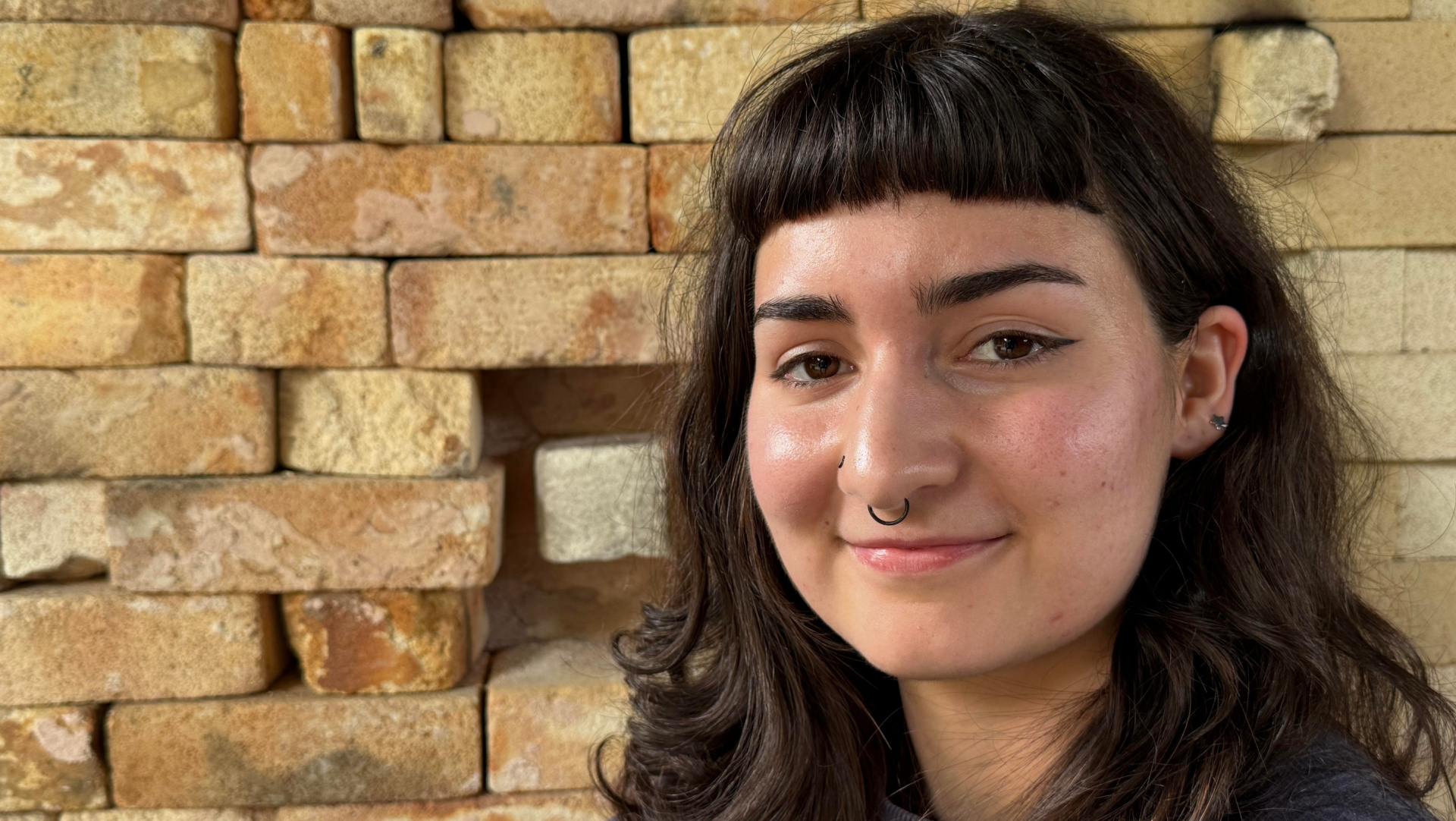
Fiona Lewis '26 found her drawings and sculpting for Guilford's thesis art exhibition therapeutic and communal.

The Senior Art Thesis Exhibition showcases 10 emerging artists preparing for careers in galleries, residencies, nonprofits and beyond.

“Most of these people are just incredibly wonderful to have in classes. They show rising Art minors and Art majors the level that can be achieved at Guilford.”

Katy Collier
Visting Asisstant Art Professor

The final brushstrokes are dry, the kilns are cool and the gallery walls are filled with work that began months — and in some cases years — ago.

In the Bauman Galleries at Founders Hall, Guilford College’s 2026 Senior Art Thesis Exhibition, “Peripheral,” runs through Saturday, offering visitors a glimpse not only into the work of 10 emerging artists but into the culmination of a yearlong professional and creative journey.

The exhibition features work by Amanda Sayaseng ’26, Ariadna Sosa ’26, Claire Dumont ’26, Fiona Lewis ’26, Jane Uebbing ’26, Madison Underwood ’26, Maddie Saxton ’26, Parker O’Keefe ’26, Will Decareaux ’26 and Amzi Chioke ’26. Their projects span painting, drawing, printmaking, sculpture and ceramics. But according to Visiting Assistant Art Professor Katy Collier, the exhibition is about far more than displaying finished pieces.

“The premise of the thesis show is guiding them through a pretty structured professional practices experience,” Katy says.

Students are responsible not only for creating artwork but also for learning how to install a gallery exhibition, curate work collectively, prepare portfolios and present themselves professionally for life after graduation.

The process begins long before artwork reaches the gallery walls.

Get to know the Guilford artists

Students apply for the thesis program during the spring of their junior year. Once accepted, they spend the following academic year developing both their artistic voice and professional skills. The fall semester focuses heavily on studio practice — refining technique, exploring concepts and determining the kind of work they want to create. By spring, attention shifts toward exhibition preparation and career readiness.

“The spring semester is much more geared toward learning the ins and outs of installation, curating a show together, doing professional artist talks and preparing their portfolio for post-graduation,” Katy says.

That preparation can lead students in several directions.

Some graduates pursue careers as working artists while balancing jobs in galleries, nonprofits or arts organizations. Others go into teaching, philanthropy, writing or service work. Parker, for example, is applying for Quaker voluntary service opportunities.

“We’re really preparing them for any kind of job that requires a humanities perspective,” Katy says. “But specifically in art, we’re preparing them for jobs in arts nonprofits, applying for exhibitions, artist residencies and teaching careers.

For students pursuing studio art professionally, artist residencies often become an important next step. Those programs — lasting anywhere from a few weeks to a year — typically provide artists with housing, studio space, mentorship and exhibition opportunities.

Several Guilford seniors are already pursuing those opportunities. Fiona has applied to an artist residency at Starworks, the ceramics center in Seagrove, N.C., while Amanda has explored residencies connected to Winston-Salem’s Sawtooth School for Visual Art.

Katy described this year’s class as unusually versatile and technically accomplished.

“One thing that was really common for a lot of them is a real high level in maybe the medium of their choice, but then also a pretty adaptable approach to other mediums,” she says.

Students such as Amanda, Ari and Fiona worked across disciplines, producing sophisticated drawings and paintings while also creating sculpture and ceramics. Katy also praised the group’s strength in two-dimensional design, particularly their understanding of composition, color, abstraction and realism.

Take a look at all of the exhibition pieces

“There was a high level of technical skill in 2D design and their ability to draw the human form,” she says.

She pointed to students including Will, Amanda, Claire, Madison and Parker as classroom leaders whose work demonstrated strong command of form and visual organization.

The exhibition also reflects the growing pipeline between Guilford and area community colleges.

Five of the exhibiting students — Ari, Amanda, Madison, Will and Fiona — transferred to Guilford from Guilford Technical Community College after earning associate degrees in Art. Maddie transferred from Rockingham Community College.

Katy says that mix created a dynamic blend inside the program. Transfer students often arrived with strong technical fine arts training, while longtime Guilford students brought a deep appreciation for the college’s interdisciplinary liberal arts culture.

“There was a really cool mixing because of that,” Katy says. “The humanities from Guilford and this more focused fine art lens from the community colleges.”

At Guilford, art students are just as likely to study ethics or religion as drawing or ceramics — an approach Katy believes broadens both artistic thinking and professional adaptability.

For now, though, “Peripheral” stands as both an ending and a beginning: a final undergraduate exhibition and a first public step into the professional art world.

“Most of these people are just incredibly wonderful to have in classes,” Katy says. “They show rising Art minors and Art majors the level that can be achieved at Guilford.”